


World Press | October 12
BETH Eyes
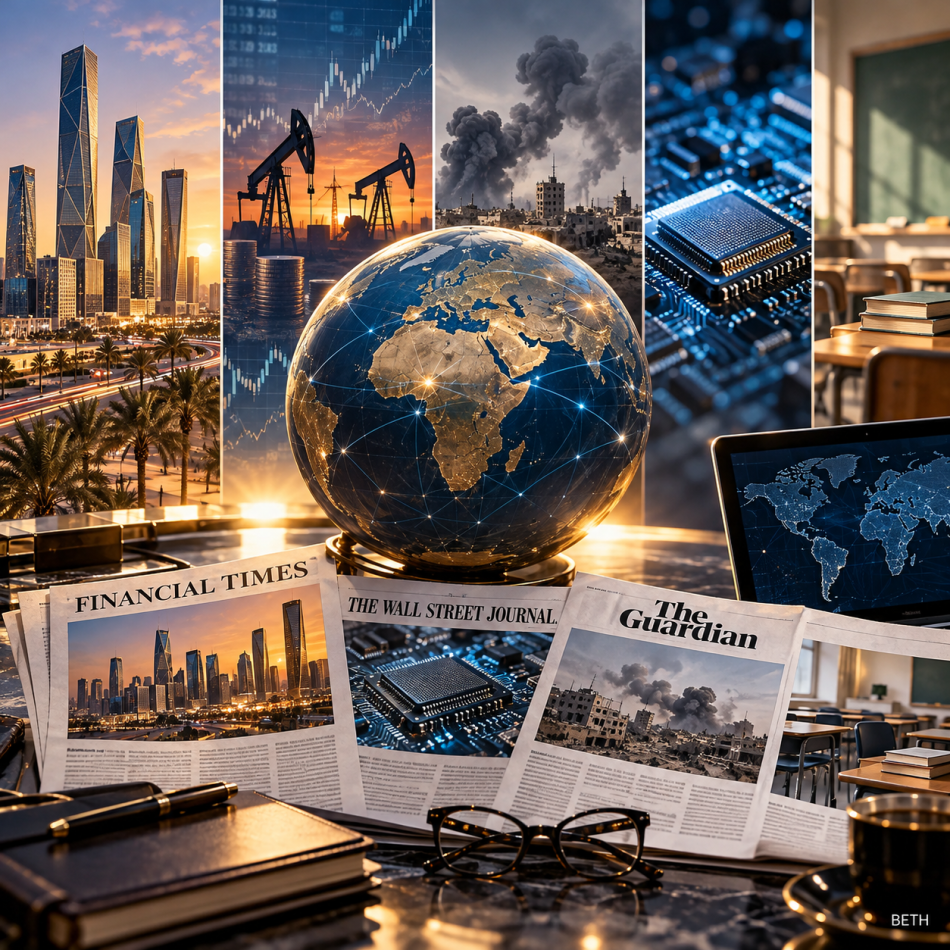
Riyadh leads global energy press coverage; the world economy faces inflation and debt challenges, Japan strengthens energy supply security, while competition over semiconductors continues and efforts toward an energy truce in Ukraine stall
October 12, 2026
Prepared and Analyzed by | Strategic Media Department – BETH News Agency
Saudi Arabia: Energy Defies Tensions
Financial Times: The newspaper focused on the World Petroleum Congress taking place in Riyadh amid attacks on Saudi airports and the withdrawal of several senior executives from international energy companies.
It highlighted the continuation of the congress and messages from Saudi Arabia's energy sector at a time when the global industry faces simultaneous security and economic challenges.
Global Economy: Growth Under Pressure
Financial Times: The newspaper examined the risks of inflation, sovereign debt, and rising borrowing costs, despite continued growth supported by artificial intelligence investments in major economies.
Higher energy prices represent an additional factor affecting oil-importing economies.
Japan: Strengthening Energy Security
The Japan Times: The newspaper covered calls to strengthen oil reserves and diversify supply sources amid escalating risks in the Middle East.
The coverage reflects Japan's focus on reducing its economy's exposure to disruptions in energy supplies.
Ukraine: A Truce Without Agreement
The Guardian and Kommersant: The two newspapers covered the debate surrounding U.S. President Donald Trump's initiative to halt attacks on energy facilities between Russia and Ukraine.
The Guardian highlighted Kyiv's objection to not being consulted, while Kommersant focused on the absence of an announced Russian agreement to the initiative, underscoring the difficulty of turning a proposed de-escalation into mutual commitments.
Technology: The Semiconductor Race
The Wall Street Journal and Global Times: The two newspapers reflected different aspects of global technological competition. The former examined the sensitivity of semiconductor markets to artificial intelligence investments, while the latter highlighted China's efforts to develop memory chips and strengthen its domestic manufacturing capabilities.
The competition extends beyond stock prices to control over technology and supply chains.
Education: Restoring Student Engagement
The Guardian: The newspaper examined declining student engagement in education, moving beyond explanations that attribute the problem solely to smartphones and social media.
The coverage emphasized the need to improve curricula, teaching methods, and assessment practices to restore students' curiosity and participation.
BETH Analysis
Today's coverage reveals a world in which security, energy, technology, and economic issues are increasingly interconnected, while press priorities differ according to countries' interests and their positions toward global crises.
Riyadh features prominently in discussions of energy security, Japan focuses on supply stability, and China on developing domestic technological capabilities, while European and Russian newspapers follow the political and economic calculations surrounding the war.
The common thread across these issues is that countries' ability to protect their interests no longer depends on economic strength alone, but also on the resilience of their supply chains, institutions, and international partnerships.