



Day 221: Hormuz Stalls Negotiations
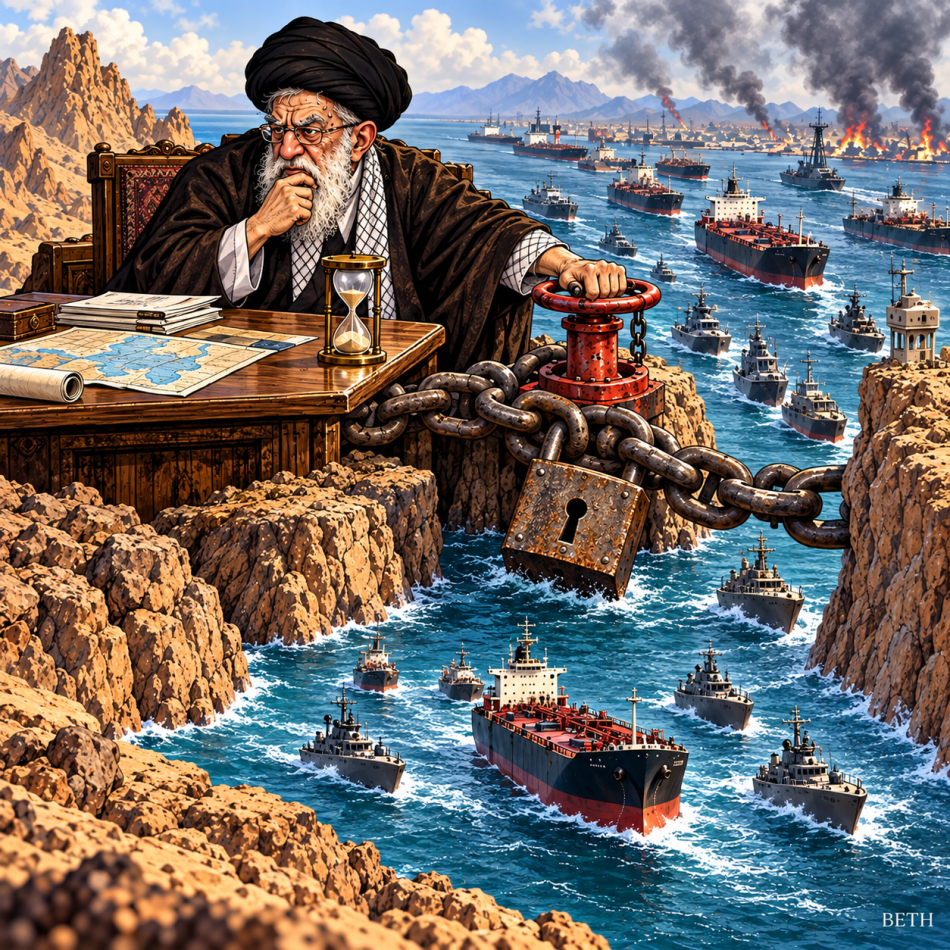
Tehran reviews U.S. proposals without a political breakthrough; new attacks on tankers near Hormuz and widening regional repercussions of the war, as reopening the strait and the nuclear issue remain central points of contention between Washington and Tehran
October 12, 2026
Prepared and Analyzed by | Strategic Media Department – BETH News Agency
The U.S.–Iran war entered its 221st day amid continued indirect contacts, with no announced progress toward an agreement, while attacks on commercial vessels once again underscored the risks facing navigation through the Strait of Hormuz.
Negotiations Without a Breakthrough
Tehran announced on Monday that it was reviewing U.S. proposals related to the negotiations and that messages continued to be exchanged with Washington through intermediaries, most notably Qatar and Pakistan.
The dispute centers on the conditions for reopening Hormuz and the sequencing of the issues under negotiation. Washington maintains that addressing Iran's nuclear program is a priority, while Tehran links the resumption of negotiations to conditions including an end to hostilities and the lifting of restrictions imposed on it.
New Maritime Attacks
The Hormuz area and the Omani coast witnessed two attacks on commercial vessels on October 11.
The vessel Petro Dolphin was attacked by a drone near Sohar, leaving two Indian sailors missing, while an unidentified projectile struck the tanker Valthera, causing a fire, with no reported injuries among its Indian crew.
The attacks prompted an Indian protest and calls to protect commercial shipping, as the U.S.–Iran confrontation over vessel movements and the naval blockade continues.
Bab Al-Mandab: A Strategic Shift
In a development parallel to the Hormuz crisis, Yemeni government forces announced that they had regained control of Bab Al-Mandab and surrounding strategic positions from the Houthis, as part of Operation "Dawn of Yemen," supported by the Saudi-led coalition.
This advance represents a significant shift in the maritime security equation, as it limits the Houthis' ability to use their coastal positions to threaten shipping at the southern entrance to the Red Sea, while tensions continue in the Strait of Hormuz.
However, regaining control of land positions does not mean the maritime threat has ended, as long as Houthi missile and drone capabilities remain capable of targeting vessels from other areas.
A new equation is thus emerging: a Yemeni government advance at Bab Al-Mandab alongside continued threats in Hormuz, while securing navigation through both straits remains an influential factor in the course of the war and in global energy and trade markets.
Regional Repercussions
The continuing Hormuz crisis coincided with escalating Houthi attacks on Saudi airports and the resulting disruption to air traffic, widening the economic and security repercussions of the war beyond the direct confrontation between Washington and Tehran.
BETH Analysis
Negotiations have entered a phase in which Washington and Tehran are exchanging proposals, but disagree on the starting point and the conditions for reaching an agreement.
Washington seeks to address security and nuclear issues, while Tehran continues to use maritime access and sanctions as leverage to strengthen its negotiating position.
Meanwhile, the maritime attacks confirm that continued negotiations do not necessarily mean a reduction in military risks.
The central impasse is that Hormuz has become both a subject of negotiation and a means of influencing its course. Prospects for de-escalation therefore remain tied to turning the exchange of messages into specific, enforceable commitments.