


Day 218: Negotiations Under Siege
Trump freezes strikes until November 3 as Washington prepares an intensive three-day military option; Tehran reviews the U.S. response to the “Seven-Day Plan,” while Hormuz gradually shifts from a closure card to a bargaining arena over the terms for ending the war
October 9, 2026
Prepared and Analyzed by | Strategic Media Management – BETH Agency
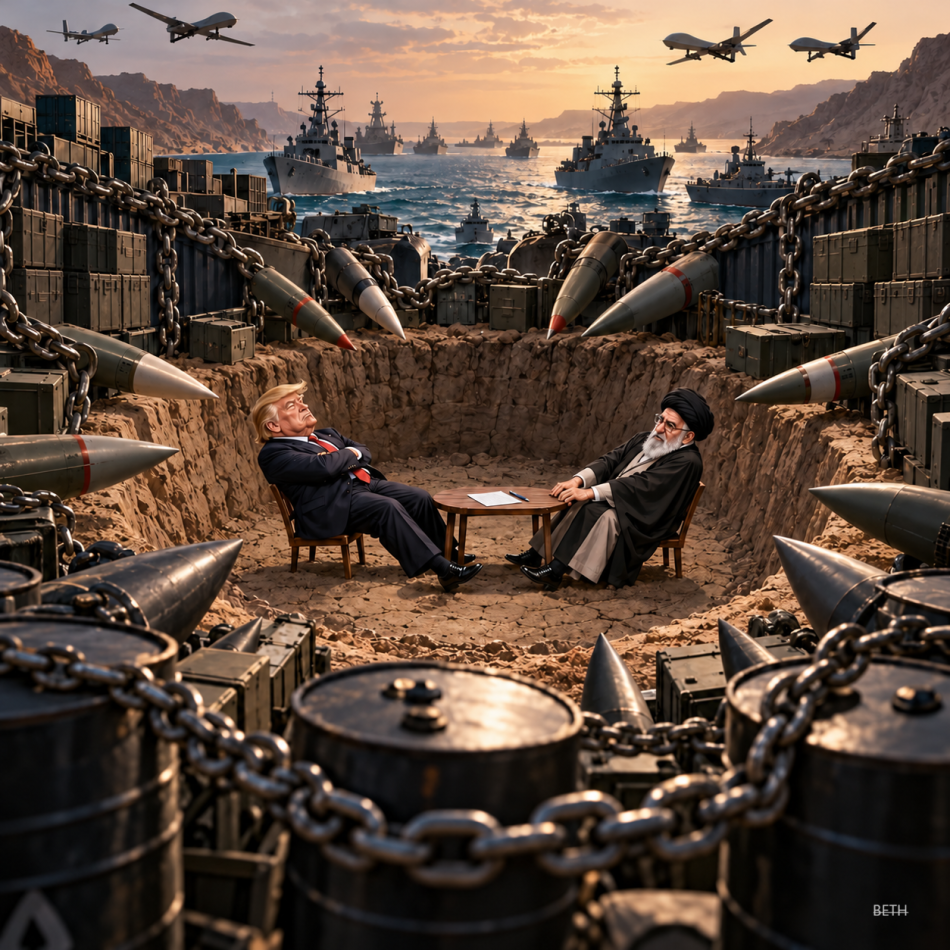
The U.S.-Iran war entered its 218th day with an increasingly clear paradox: the strike has been postponed, but preparations for it are advancing; negotiations continue, but each side is negotiating while holding on to its instruments of power.
President Donald Trump announced that he would not order strikes against Iran before the November 3 midterm elections, referring to “productive talks.” In the background, U.S. reports indicate that the Department of Defense is preparing an option for an intensive three-day attack focused on Iran’s missile capabilities, drones, and military centers, meaning that the postponement is a political decision rather than a dismantling of the military option. A third U.S. aircraft carrier is also heading to the region during October.
On the other track, Tehran has not rejected negotiations. President Masoud Pezeshkian confirmed that new proposals had been exchanged with Washington, while Abbas Araghchi said Iran is reviewing the U.S. response to the “Seven-Day Plan” and will reply through mediators within days. The plan includes reopening the Strait of Hormuz and resuming negotiations in return for U.S. steps related to halting military operations, the blockade and sanctions, as well as releasing frozen Iranian assets.
What is notable is that Hormuz itself has begun to change. Tehran has announced progress with Oman in defining safe entry and exit routes, while U.S. forces are moving to reassure shipping companies and encourage the return of commercial traffic. This does not mean that confrontation in the Strait has ended, but it does mean that the discussion has partly shifted from “who controls it?” to how ships pass, and under what guarantees?
At the same time, Washington has kept economic pressure in place, targeting 17 vessels linked to the transport of Iranian oil, while oil prices remained above $100 despite falling after Trump announced the postponement of strikes.
Assessment:
Day 218 is neither a truce nor the beginning of the end.
It is a separation between the decision to wage war and the preparation for war.
Washington is giving diplomacy until November 3, while simultaneously building greater capacity to strike afterward. Tehran is negotiating over Hormuz, sanctions, and the blockade, but it is not giving up its instruments of retaliation.
That is why negotiations today are under siege from both sides: by military power on one side, and by the Strait and sanctions on the other.
The real test is not only what happens before November 3, but: what will be ready at the negotiating table and on the battlefield on the morning of November 4?