



Day 217: Strikes Over Negotiations
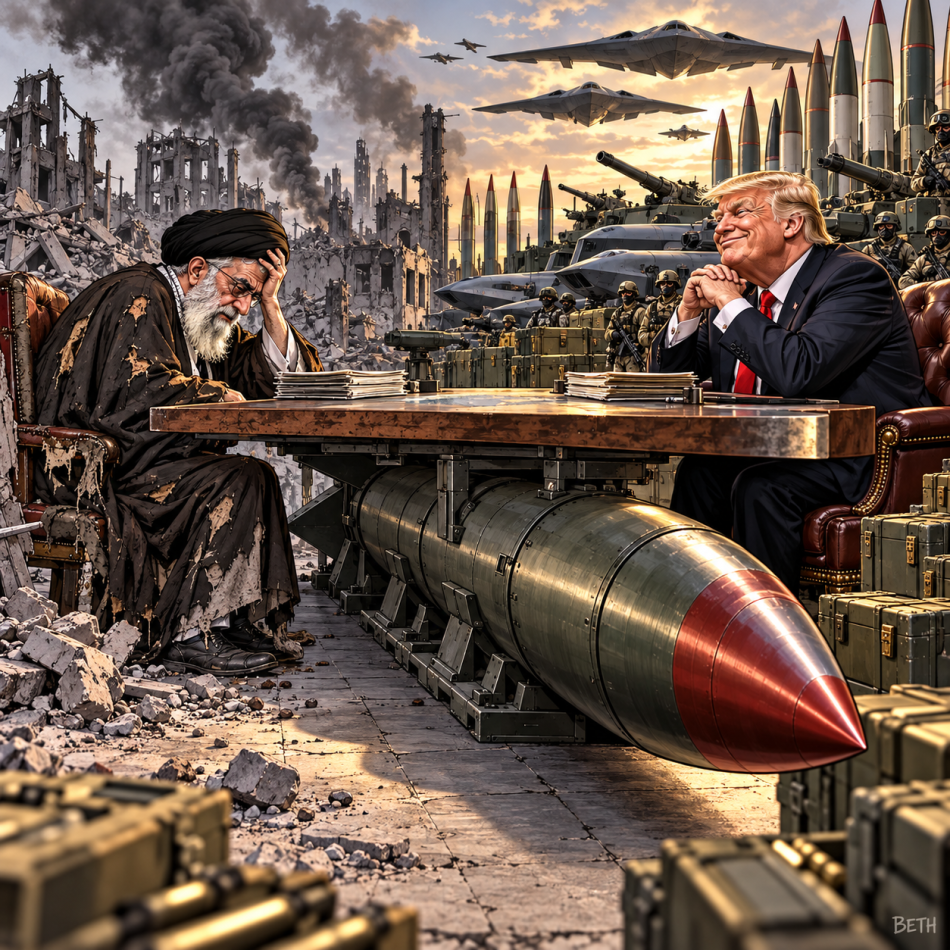
Washington requests new military options against Iran while insisting on a substantial reduction in uranium enrichment; Hormuz traffic falls to its lowest level in more than two months following escalating tanker attacks, while oil rises above $104
October 8, 2026
Prepared and Analyzed by | Strategic Media Management – BETH Agency
The U.S.-Iran war entered its 217th day on two parallel tracks: negotiations continue, but U.S. military preparations are intensifying rather than receding.
The White House has asked the Department of Defense to prepare options for new strikes against Iran, while the final decision remains with President Donald Trump. This comes alongside a tougher U.S. political position on the conditions for ending the war, foremost among them a substantial and lasting reduction in Iran’s uranium-enrichment capabilities.
This development places the negotiations within a clearer equation: Washington is negotiating while retaining the option of expanding the war, while Tehran is trying to keep Hormuz as a pressure card that prevents U.S. military superiority from being translated into full political terms.
In the Strait, the number of transiting vessels fell to its lowest level in more than two months following the escalation in attacks on tankers. Crude flows through Hormuz dropped to around 10.1 million barrels per day, or roughly 74% of pre-war levels, while routes through the Red Sea and the Gulf of Oman offset a significant part of the decline, keeping the region’s overall exports close to previous levels.
Maritime risk itself, however, has increased. A tanker near the Qatari coast was attacked with several projectiles, causing injuries, while last week recorded the highest number of tanker attacks since the war began.
The impact was immediately reflected in the markets, with Brent crude rising above $104 per barrel.
Assessment:
Day 217 points less to an approaching settlement than to a phase of negotiation through force: Washington is tightening the terms for ending the war, while Iran is attempting to raise the cost of imposing them. Between the two, Hormuz remains the fastest indicator of whether the war is moving toward a political exit — or another military round.
Evening Developments
In a notable development, President Donald Trump announced that the United States will not resume military strikes against Iran before the midterm elections scheduled for November 3, while confirming that Washington and Tehran are holding “productive talks.” The position gives the diplomatic track a clear time window, while the U.S. blockade remains in place and military reinforcements continue in the region, meaning that the suspension of strikes does not amount to a retreat from pressure tools.
On the other hand, U.S. Central Command (CENTCOM) confirmed that the Strait of Hormuz remains open to maritime navigation, rejecting claims by Iran’s Islamic Revolutionary Guard Corps that it had closed the strait or established control over it.
CENTCOM said U.S. forces are present in the Strait of Hormuz area and are providing the necessary protection for commercial vessels as part of efforts to ensure the continued flow of maritime traffic and global energy supplies.