


مملكة الإنسانية… مساعدات موثّقة تصل إلى 173 دولة حول العالم
إعداد وتحليل | BETH
مقدمة
في وقتٍ يشهد فيه العالم تراجعًا ملحوظًا في التمويل الإنساني، مقابل تصاعد الأزمات والحروب والكوارث الطبيعية، يبرز مركز الملك سلمان للإغاثة والأعمال الإنسانية (KSrelief) بوصفه نموذجًا مختلفًا في إدارة العمل الإنساني، يقوم على المأسسة، والاستدامة، والشفافية.
ولا يقتصر دور المركز على الاستجابة الطارئة، بل يتجاوزها إلى بناء منظومة إنسانية متكاملة، تُدار بالأرقام، وتُقاس بالأثر، وتُوثَّق عبر بيانات مفتوحة تتيح القراءة والتحليل.
مركز الملك سلمان للإغاثة والأعمال الإنسانية
وهو من أهم الهيئات السعودية في العمل الإنساني الدولي، ودوره يتجاوز الإغاثة المؤقتة ليشمل شراكات، مشاريع تنموية، وإحصاءات بيانات مفتوحة
1. نبذة تعريفية وتحليل استراتيجي
تأسس المركز في مايو 2015 بتوجيه من خادم الحرمين الشريفين الملك سلمان بن عبدالعزيز، ويقع في الرياض، ويشرف عليه الدكتور عبدالله بن عبدالعزيز الربيعة
الهدف: توحيد جهود المساعدات الإغاثية والإنسانية السعودية، وتطويرها دوليًا، والتعاون مع المنظمات الأممية
➡ تحليل BETH:
KSrelief يُعدّ نموذجًا للدور السعودي الحضاري في العمل الإنساني، يوازن بين الإغاثة الطارئة والمشاريع المستدامة، ويعمل ضمن شراكات مؤسسية راسخة، ما يعزز ثقة الشركاء الدوليين في دوره. (سياسيًا وترابطيًا، يضع هذا المركز الرياض في قلب الخطط الإنسانية العالمية.)
منصة المساعدات السعودية… الأرقام تتحدث
تُمثّل منصة المساعدات السعودية (data.ksrelief.org) إحدى أبرز أدوات العمل الإنساني السعودي المعاصر، حيث توفّر قاعدة بيانات مفتوحة وشاملة توثّق حجم المساعدات، مساراتها، وقطاعاتها، بما يعكس التزامًا غير مسبوق بمبدأ الشفافية في العمل الإنساني.
حجم المساعدات – قراءة رقمية
وفق بيانات منصة المساعدات السعودية:
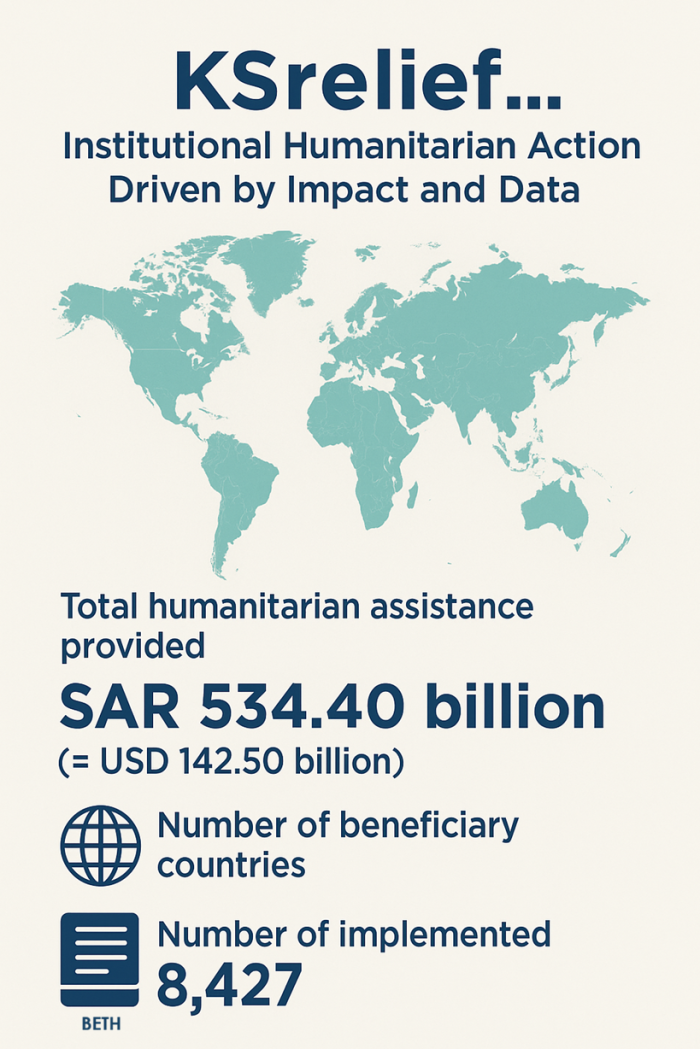
إجمالي المساعدات المقدمة:
534.40 مليار ريال سعودي
(≈ 142.50 مليار دولار)
منذ تأسيس المركز حتى اليوم.
أعلى الدول استقبالًا للمساعدات:
مصر: نحو 32.49 مليار دولار
اليمن: نحو 28.14 مليار دولار
باكستان: نحو 13.20 مليار دولار
سوريا: نحو 7.69 مليار دولار
العراق: نحو 7.33 مليار دولار
فلسطين: نحو 5.56 مليار دولار
نطاق الانتشار:
عدد الدول المستفيدة: 173 دولة
عدد المشاريع المنفذة: نحو 8,427 مشروعًا
هذه الأرقام لا تعبّر فقط عن حجم الدعم، بل عن اتساع الجغرافيا الإنسانية السعودية، وقدرتها على العمل في بيئات متعددة، سياسية ومناخية وأمنية شديدة التعقيد.
التحليل | قراءة BETH
من منظور تحليلي، لا تُعد منصة المساعدات السعودية مجرد واجهة عرض بيانات، بل تمثل تحولًا نوعيًا في فلسفة العمل الإنساني. فهي تنقل المساعدات من إطار “العمل الخيري” إلى إطار السياسة الإنسانية المدروسة، القائمة على:
1. الحوكمة والشفافية
إتاحة البيانات المفتوحة تعزّز الثقة الدولية، وتمكّن من قياس الأثر، ومقارنة النتائج، وتصحيح المسار عند الحاجة.
2. الانتقال من الإغاثة إلى الاستدامة
تنوع القطاعات والمشاريع يؤكد أن المساعدات لا تقتصر على الطوارئ، بل تمتد إلى التعليم، الصحة، المياه، والتعافي المبكر.
3. تعزيز الشراكات الدولية
الأرقام الكبيرة، حين تقترن ببيانات دقيقة، تجعل KSrelief شريكًا موثوقًا للمنظمات الأممية والدولية، لا مجرد جهة تمويل.
في عالم يشهد تطبيعًا للعجز الإنساني وتراجعًا في التزامات المانحين، يقدّم النموذج السعودي مقاربة مختلفة: إنسانية تُدار بالبيانات، لا بالشعارات.
خلاصة BETH
تكشف تجربة مركز الملك سلمان للإغاثة، مدعومة بمنصة المساعدات السعودية، أن العمل الإنساني الحديث لم يعد يُقاس فقط بحجم الأموال، بل بقدرة المؤسسة على التوثيق، والحوكمة، وتحويل الدعم إلى أثر مستدام.
وفي زمن تتقلص فيه الموارد وتتضاعف الأزمات، تصبح هذه التجربة نموذجًا جديرًا بالقراءة والاحتذاء على المستوى العالمي.
🔗 مركز الملك سلمان للإغاثة
https://www.ksrelief.org/ar
🔗 منصة المساعدات السعودية
https://data.ksrelief.org/
🔗 موضوع ذو صلة
أزمة التمويل الإنساني… حين تتراجع المساعدات وتتمدّد المخاطر
https://bethpress.com/News/Details/23178
The Kingdom of Humanity… Documented Aid Reaching 173 Countries Worldwide
Prepared & Analyzed by | BETH
Introduction
At a time when global humanitarian funding is witnessing a noticeable decline—amid escalating crises, prolonged conflicts, and accelerating climate disasters—the King Salman Humanitarian Aid and Relief Centre (KSrelief) stands out as a distinct model in managing humanitarian action.
Its approach is built on institutionalization, sustainability, and transparency.
KSrelief’s role goes beyond emergency response. It has evolved into an integrated humanitarian system—managed by data, measured by impact, and documented through open-access platforms that enable monitoring and analysis.
King Salman Humanitarian Aid and Relief Centre
KSrelief is one of Saudi Arabia’s most significant international humanitarian institutions. Its mandate extends beyond temporary relief to include strategic partnerships, development-oriented projects, and advanced data documentation mechanisms.
1. Institutional Overview & Strategic Reading
Established in May 2015 by directive of the Custodian of the Two Holy Mosques, King Salman bin Abdulaziz, KSrelief is headquartered in Riyadh and supervised by Dr. Abdullah bin Abdulaziz Al Rabeeah.
Core Mission:
To unify Saudi humanitarian and relief efforts, enhance their global effectiveness, and strengthen cooperation with UN agencies and international organizations.
BETH Analysis:
KSrelief represents a civilizational Saudi role in global humanitarian action—balancing emergency relief with long-term sustainability through strong institutional partnerships.
Politically and strategically, this positions Riyadh at the heart of global humanitarian planning and coordination frameworks.
The Saudi Aid Platform… When Numbers Speak
The Saudi Aid Platform (data.ksrelief.org) represents one of the most advanced tools in contemporary humanitarian governance. It provides an open, comprehensive database documenting the scale, destinations, and sectors of Saudi humanitarian assistance—reflecting an unprecedented commitment to transparency.
Aid Volume – A Data-Driven Reading
According to the Saudi Aid Platform:
Total humanitarian assistance provided:
SAR 534.40 billion
(≈ USD 142.50 billion)
since the establishment of KSrelief.
Top Recipient Countries:
Egypt: ~USD 32.49 billion
Yemen: ~USD 28.14 billion
Pakistan: ~USD 13.20 billion
Syria: ~USD 7.69 billion
Iraq: ~USD 7.33 billion
Palestine: ~USD 5.56 billion
Global Reach:
Number of beneficiary countries: 173
Number of implemented projects: ~8,427 projects
These figures reflect not only the scale of Saudi humanitarian support, but also the breadth of its humanitarian geography and its ability to operate across complex political, climatic, and security environments.
Analysis | BETH Perspective
From an analytical standpoint, the Saudi Aid Platform is not merely a data display interface—it represents a qualitative shift in humanitarian philosophy, moving assistance from charitable impulse to structured humanitarian policy, based on:
Governance & Transparency
Open data enhances international trust, enables impact measurement, and allows continuous evaluation and course correction.
From Relief to Sustainability
Sectoral diversity confirms that Saudi aid is not confined to emergencies, but extends to education, healthcare, water, sanitation, and early recovery.
Strengthening Global Partnerships
Large-scale funding, when paired with precise data, positions KSrelief as a credible and reliable partner for UN agencies and international institutions—not merely a funding source.
In a world increasingly normalizing humanitarian shortfalls and donor fatigue, the Saudi model presents an alternative:
Humanitarian action governed by data—not slogans.
BETH Conclusion
The KSrelief experience—supported by the Saudi Aid Platform—demonstrates that modern humanitarian action is no longer measured solely by financial volume, but by the ability to document, govern, and convert aid into sustainable impact.
At a time when resources are shrinking and crises multiplying, this model stands as a globally relevant benchmark worthy of study and emulation.
Related Links
🔗 King Salman Humanitarian Aid and Relief Centre
https://www.ksrelief.org/ar
🔗 Saudi Aid Platform (Open Data)
https://data.ksrelief.org/
🔗 Related Topic
Humanitarian Funding Crisis… When Aid Declines and Risks Expand
https://bethpress.com/News/Details-en/23179